Skip to the main content.
TRIAL
REQUEST DEMO
TRIAL
REQUEST DEMO

Steve Wilson

Steve Wilson is Chief Revenue Officer at DeskAlerts, a leading provider of internal communications software and emergency notification systems for enterprise organizations worldwide. He specializes in internal communication strategy, mass notification systems, and employee alerting solutions designed to improve organizational responsiveness and safety. With extensive experience supporting Fortune 1000 companies, financial services organizations, healthcare providers, and government agencies, Steve has helped organizations implement scalable communication systems that deliver critical messages across multiple channels, including desktop alerts, mobile notifications, email, SMS, and digital signage. His areas of expertise include: Internal communications strategy for large and distributed workforces Emergency notification systems and crisis communication Mass notification software implementation and optimization Compliance-driven communications for regulated industries Multi-channel employee alerting and engagement At DeskAlerts, Steve focuses on helping organizations ensure the right message reaches the right people at the right time—improving operational efficiency, strengthening crisis response, and supporting business continuity. His insights center on best practices for enterprise communication systems, alerting technologies, and the evolving role of internal communications in high-performance organizations

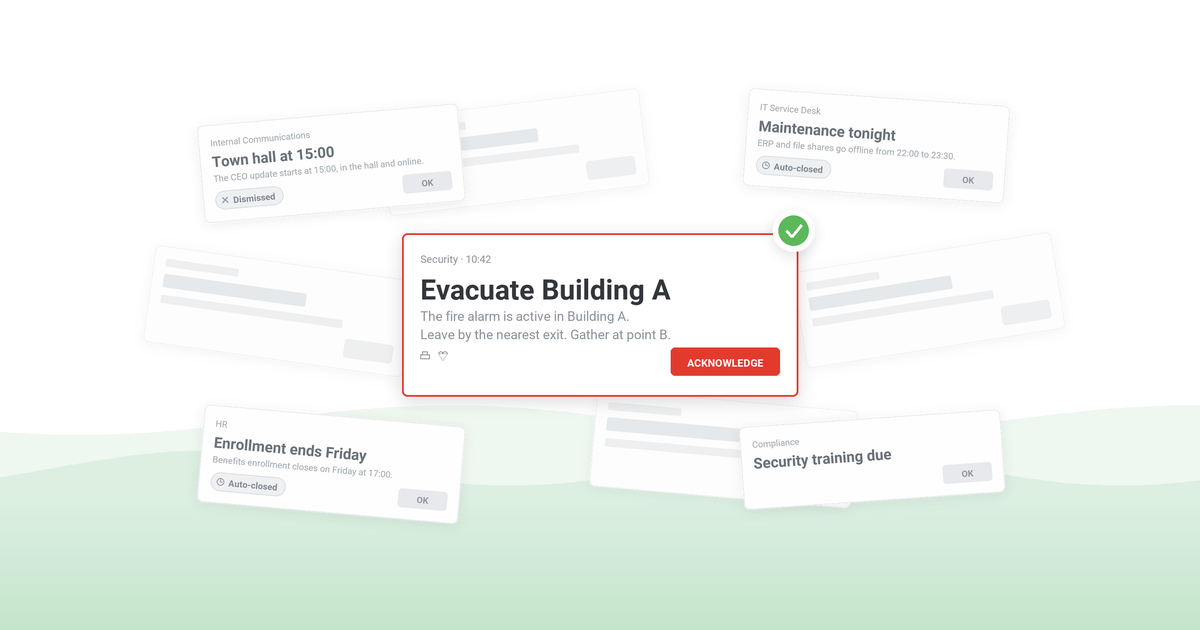
A red evacuation alert on top of a pile of grey routine alerts, some auto-closed or dismissed

10 min read

Notification Fatigue: Why Employees Ignore Alerts – and How to Design Alerts They Read

Employees ignore alerts when the alert stream has taught them that most alerts can wait: company-wide sends that concern only a few people, routine and critical notices in the same format, and a pace set by whichever team sends the most. Senders can...

Read More
Three employees – at a desk, on the move and working remotely – each receiving the same alert

10 min read

How to Build an Employee Notification Process: Use Cases, Automation and Rollout

IT outages, emergencies, policy changes and HR announcements all have to reach the right employees on time, and some need a record of who received and confirmed them. An employee notification process...

Read More
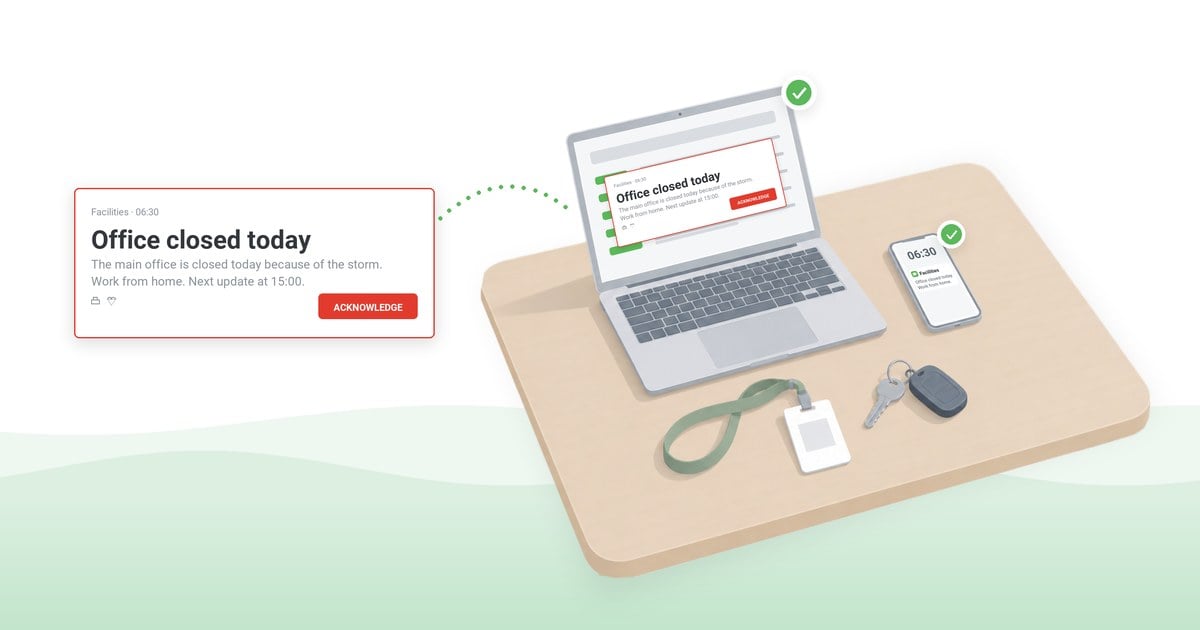
A home desk at 06:30 with the office-closed notice on a laptop and as a text message on a phone

12 min read

Alternatives to Email for Urgent Employee Notifications: Desktop Alerts, SMS, Teams and Screens Compared

The alternatives to email for urgent employee notifications are desktop alerts, SMS, mobile push, Microsoft Teams, digital signage and voice calls – used together, because no single channel reaches...

Read More
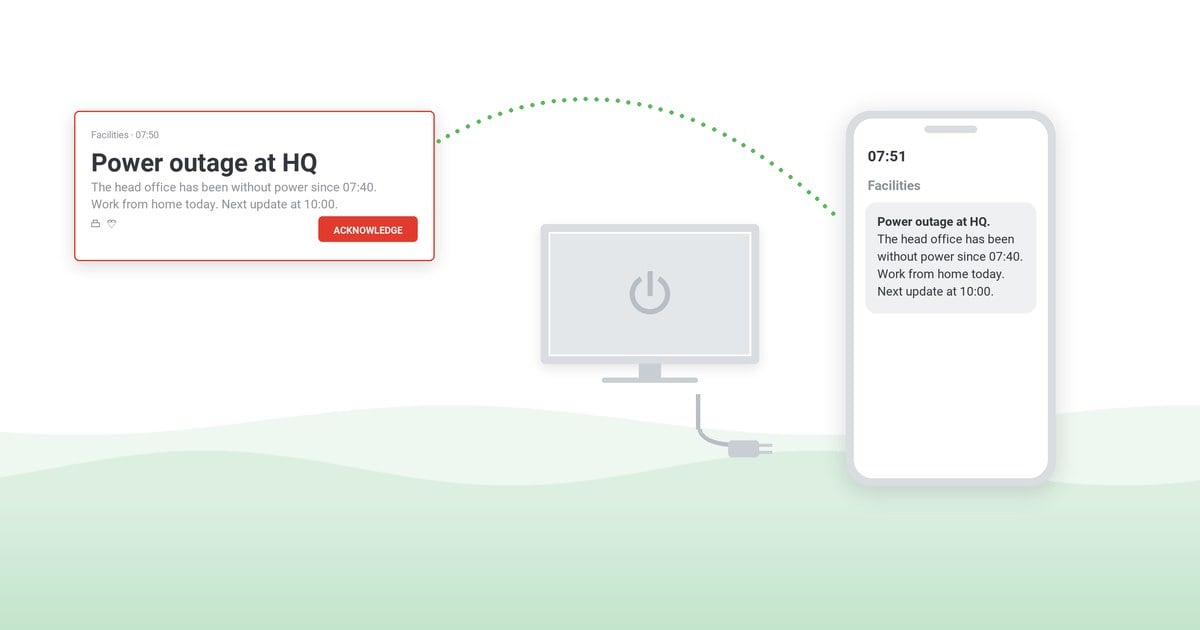
Power outage at HQ: one Facilities notice sent at the same time as a desktop alert with an Acknowledge button and as a text to an employee's phone while the office PC is off

11 min read

Pros and Cons of a Text Message Alert System for Business

Messages about site closures and evacuations tend to miss the people who are not at a screen – the night shift, field crews and drivers, staff at home when a site closes at 5 a.m. Afterward, the...

Read More
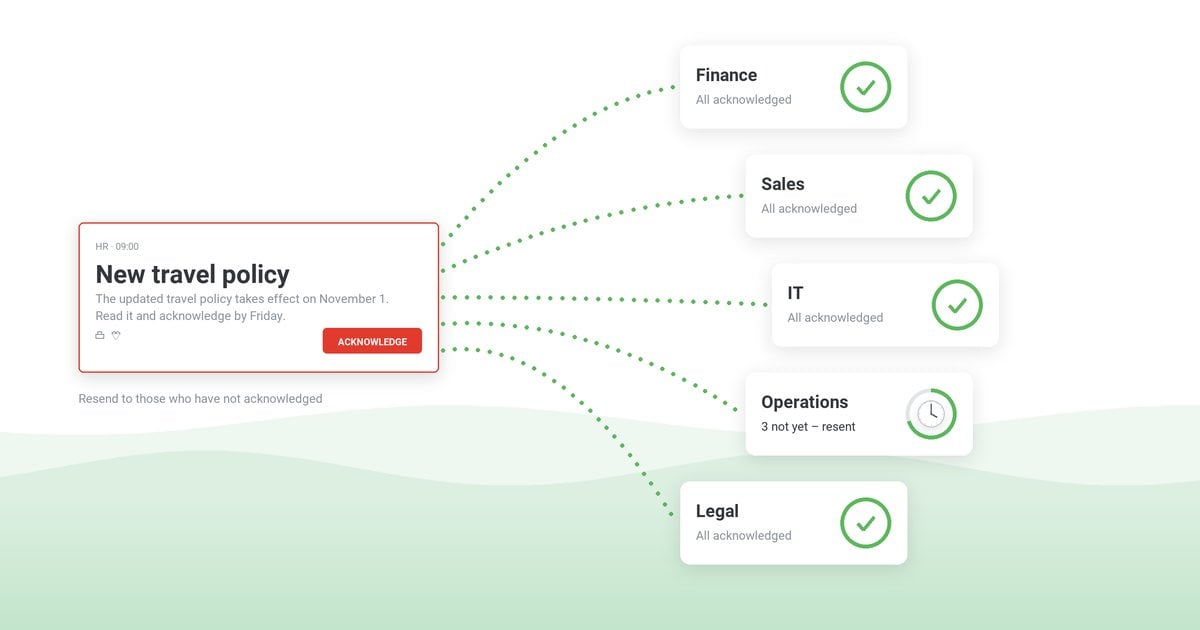
Department tiles with acknowledgment rings: four complete, one pending and resent

10 min read

How to Confirm Employees Have Read a Critical Message – and Know Who Acknowledged It

Confirming that employees have read a critical message comes down to a record you can defend: the exact text sent to named people, a deliberate confirmation from each of them, and what you did about...

Read More
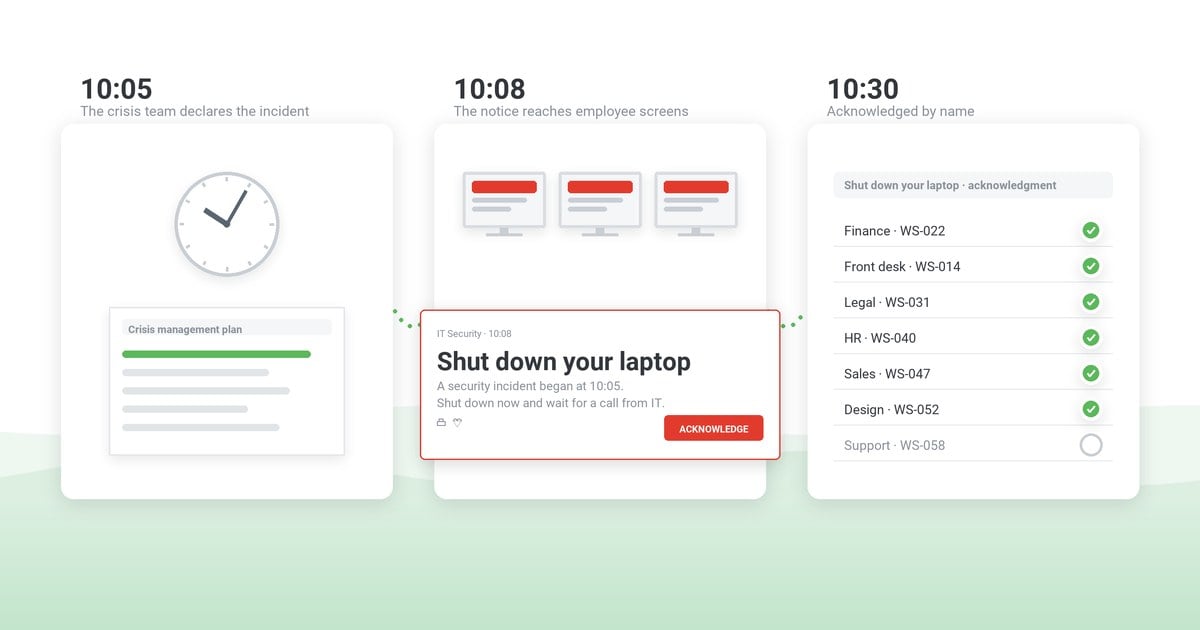
A crisis timeline: declared at 10:05, notified at 10:08, acknowledged by 10:30

7 min read

What Is Crisis Management? Definition, Team, Phases

Crisis management is the organized way a company prepares for, responds to and recovers from an event that threatens its people, its operations or its reputation. It assigns decisions to named people...

Read More
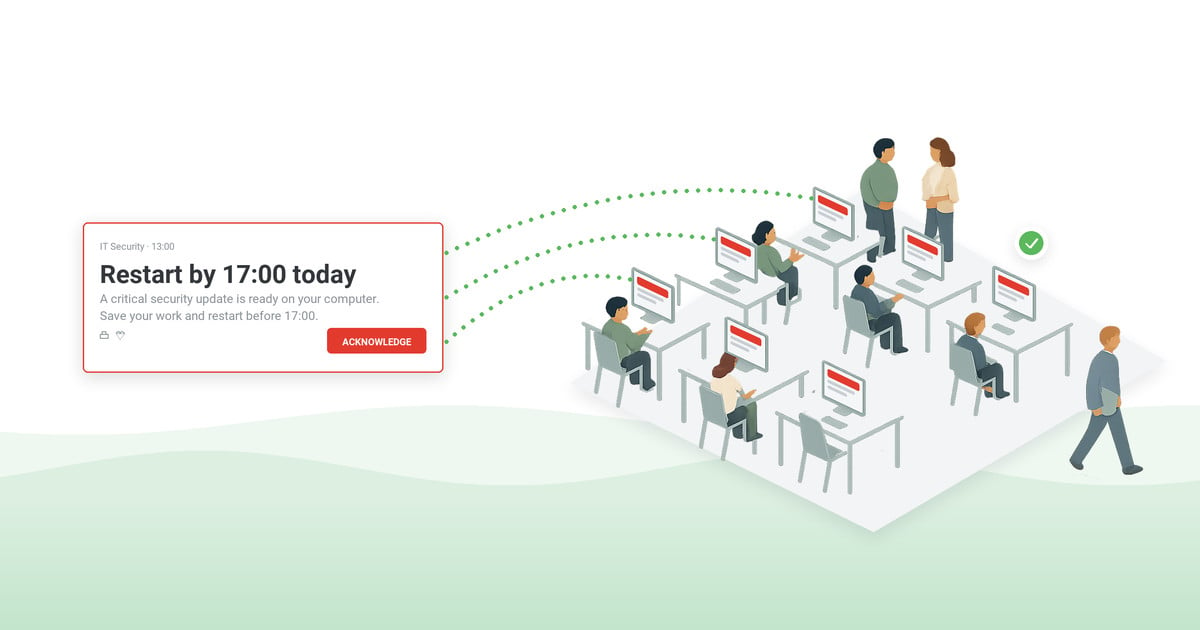
An office floor seen from above, with the same pop-up notice on the monitors of the floor

10 min read

Send a Pop-Up Message to All Computers: net send, msg, and PowerShell

Windows has no built-in command that sends a pop-up to every computer on a network. The net send command has not been supported since Windows Vista, and its built-in successor, the msg command,...

Read More
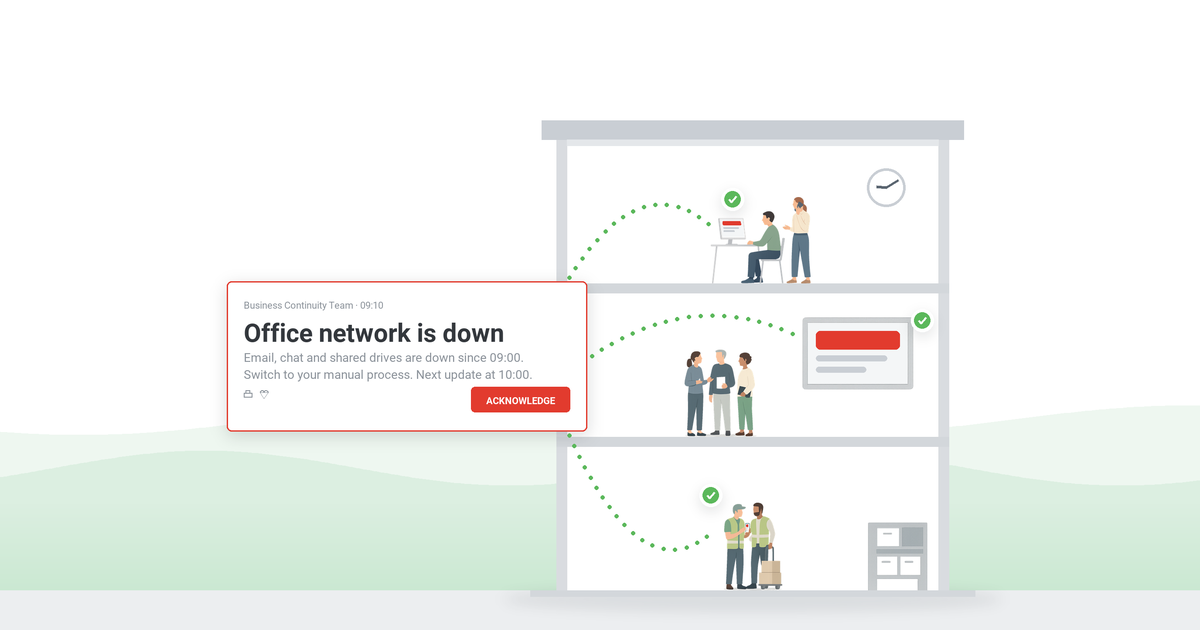
A business continuity notice reaching every floor of a building: colleagues at a desk, a team at a wall display and warehouse workers with a phone all see the alert Office network is down

9 min read

Business Continuity Communication Plan: Template, Roles and Channels

A business continuity communication plan is the part of a business continuity plan that most teams write last and need first. When a system, a site or a supplier fails, the recovery work starts with...

Read More
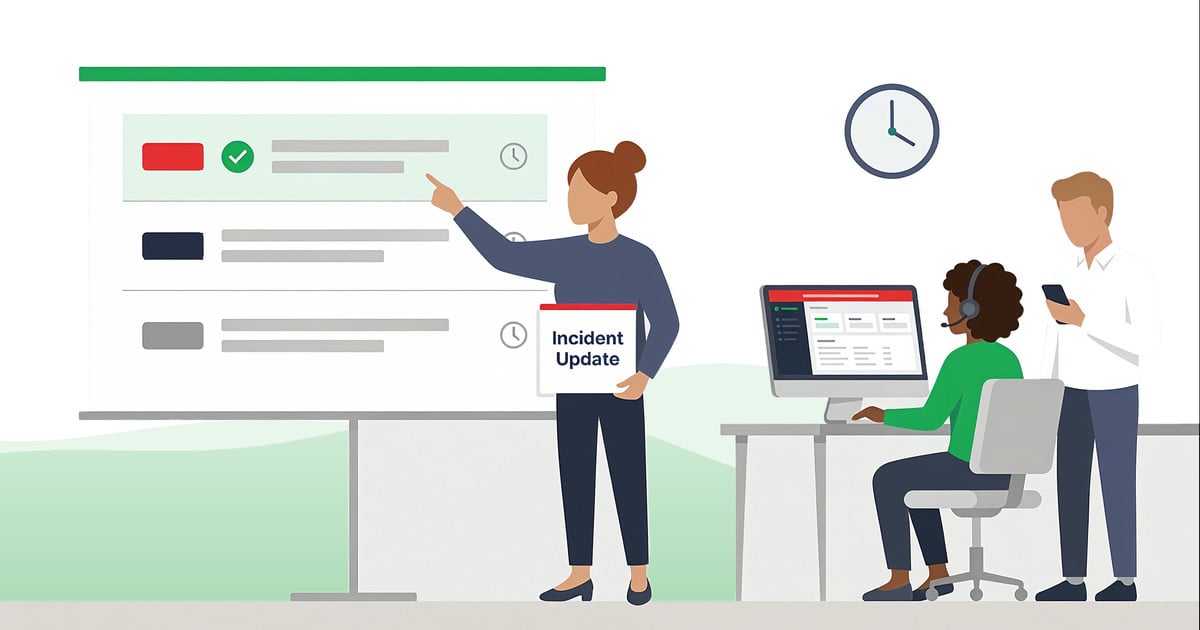
Incident communication runbook: severity board with first-notice deadlines, a prepared incident update card, and the on-call desk

6 min read

Incident Communication Runbook: Template, Roles, and Message Flow

An incident communication runbook settles, before anything breaks, who says what, to whom, on which channel, and how often during an IT or service incident. When a system goes down, two clocks start:...

Read More
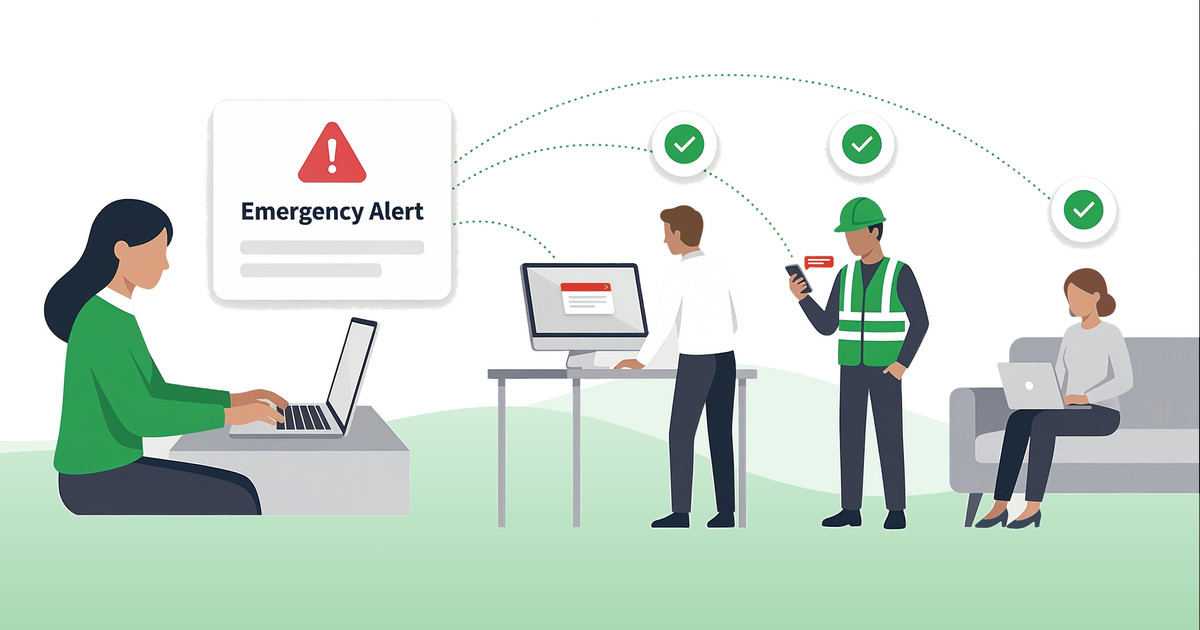
Emergency communication plan in action: a red alert reaches desktop, phone and laptop, three employees confirm

6 min read

Emergency Communication Plan: Template, Components, and How to Choose the Delivery Layer

An emergency communication plan answers three questions before anything happens: who tells whom, through which channels, and how you will know the message arrived. This guide gives you the six...

Read More

Explore our innovative solutions and enhance your organization's safety and efficiency

TRY FOR FREE

Alert software solutions play a vital role in helping organizations effectively communicate and disseminate important messages to employees in a timely and targeted manner. Leveraging alert software can enable organizations to streamline communication processes, ensure message delivery, and enhance employee awareness of critical information and updates. Implementing alert software solutions can empower organizations to improve emergency preparedness, boost employee engagement, and foster a culture of efficient and responsive communication within the workplace.