 Taking actions to ensure that employees have a safe workplace is a top priority for every employer. This includes communicating workplace safety with employees. When it comes to ensuring safety messages for the workplace are delivered appropriately, sending safety newsletters is a good way to ensure you get the information out there.
Table of Contents
1. 40 safety newsletter ideas
2. How to communicate your work safety rules
3. Workplace safety newsletter examples for your company
40 safety newsletter ideas
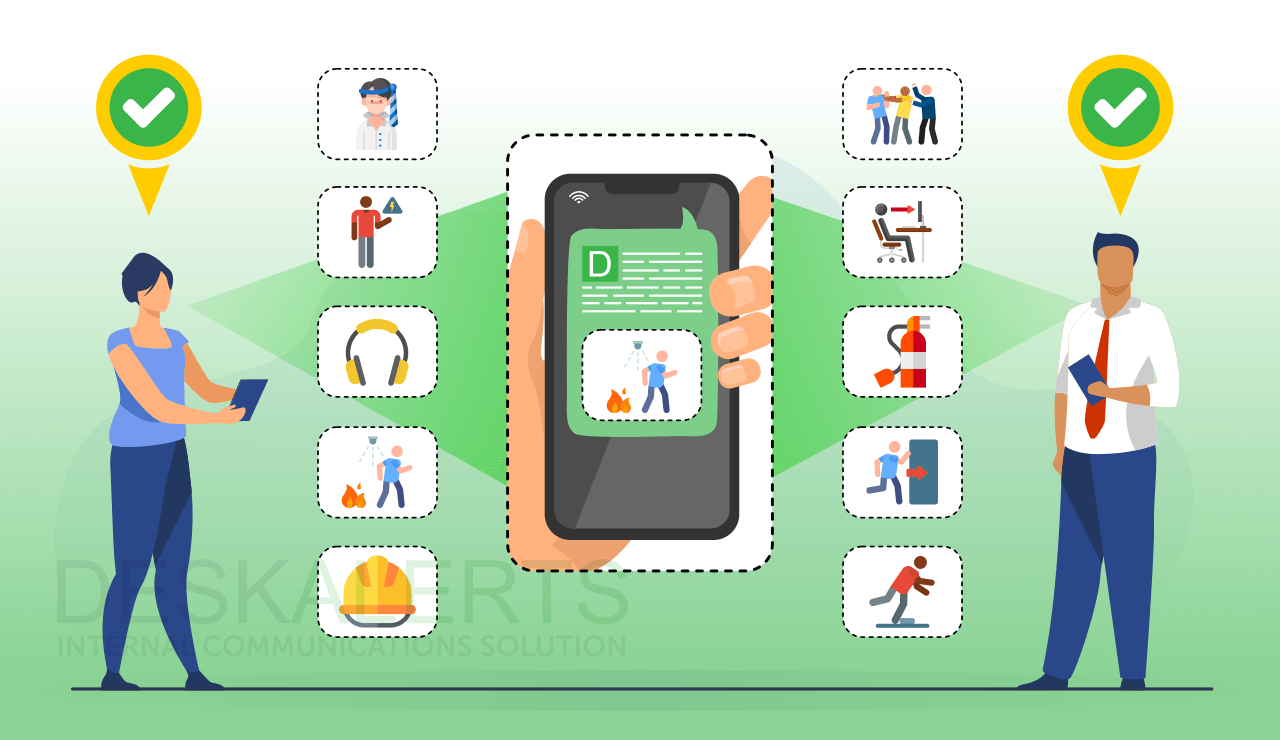
Whether you create a standalone safety newsletter or include a regular workplace safety section in your current internal newsletter, you can cover lots of topics to ensure that your employees know what to do to keep themselves and their colleagues safe. Some workplace safety newsletter topic examples include:
- How to report a safety issue in your company – explain why it is important and what internal processes must be followed.
- How to identify hazards and risks - specific to your workplace and the work that you do.
- First Aid Kit awareness - where are the first aid kits located, what is in them and what other protocols need to be followed when using them.
- How to prevent slips, trips and falls
- Ergonomics - the correct way that workstations should be set up and how employees can get help.
- How to use fire extinguishers - where are they located, when should they be used and how to operate them.
- Safe driving tips – reminders about the safety measures employees should take when driving company vehicles.
- Drug and alcohol impairment - advise employees about the many consequences of being under the influence of drugs and/or alcohol in the workplace.
- Prevention of strains and sprains - how to avoid straining or spraining ligaments and muscles in the workplace, including repetitive strain injury.
- The importance of taking regular breaks
- Electrical hazard awareness - be careful with appliances, power cords and power points and know when they can pose a risk of fire or electric shock.
- Working safely at heights - relevant if your industry includes construction or logistics where employees work high up from the ground.
- COVID-19 safety – measures that employees must take to stay safe including social distancing, masks, hand washing etc .
- COVID-19 vaccination information – if your company is mandating vaccines, provide relevant information about how and when employees need to get them and how to show proof.
- How to return to work after injury - what supports and measures are in place to help an injured staff member return to work safely
- Importance of mental health - why it is important to look after mental health at work as well as physical health - include information about any resources.
- Hazardous chemicals - specific information and advice about chemicals that are present within your premises.
- Why employees should speak up – encourage employees to talk about safety concerns without fear of reprisals.
- Emergency preparedness - reminders about what to do in an emergency situation.
- PPE requirements - if you require personal protective equipment to be worn, explain when and how employees must do so.
- Safety advice for remote workers - if people are working from home they still need to ensure they have a safe workplace.
- Hot or cold weather safety advice - what employees need to know about working in the elements if the weather is extreme.
- Information about safety training opportunities.
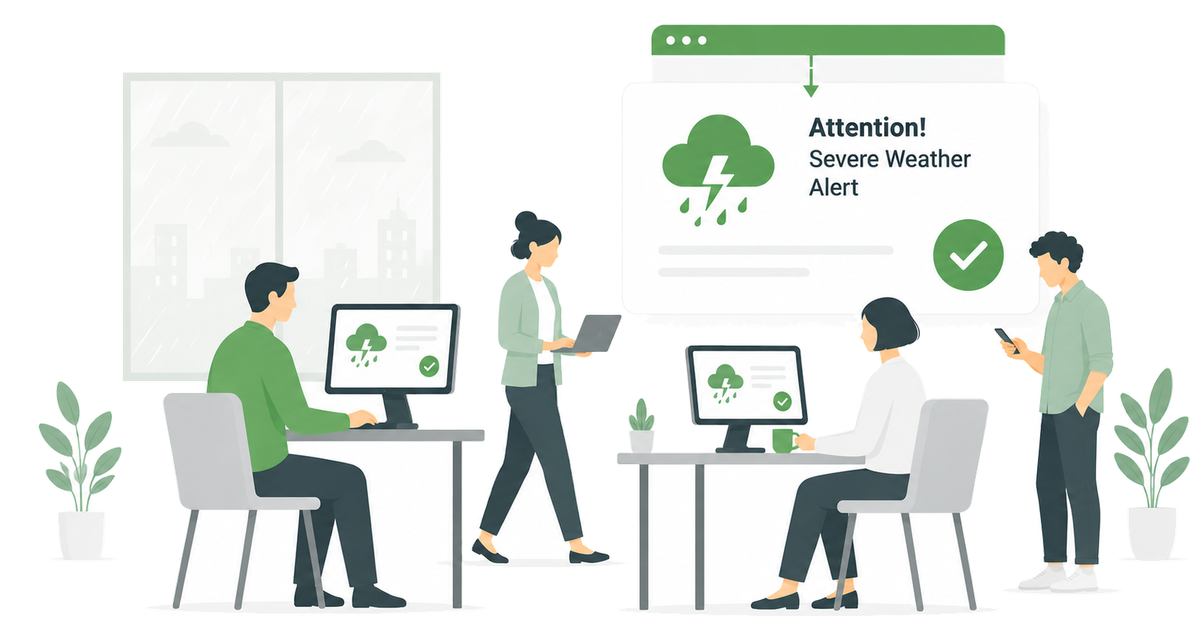
- Advice about weather emergencies - what employees need to know about working in storms, tornados, floods, blizzards and more.
Read more: Inclement weather email to employees
- Safe lifting guidelines - if employees have to lift heavy objects, what must happen to avoid injury.
- Healthy eating in the workplace
- Importance of sleep - what risks are there to workplace health and safety if people are sleep deprived.
- Workplace fatigue - when workers put in long hours and long shifts there can be negative impacts.
- Why the workplace needs to be tidy - the importance of good housekeeping at work to reduce risks
- Workplace violence policy - remind employees what this means and what conduct is expected of them.
- Fire wardens and first aid officers - make sure your employees know who has these responsibilities.
- Importance of ventilation - why you need clean and fresh air and the risks of carbon monoxide poisoning.
- Employee Assistance Program - if you offer one to your employees, explain what it is, how to access it and what benefits it provides.
- Stretches and movement - what can desk-bound employees do to ensure they move regularly.
- Report on your own safety data - whether its good or bad, let employees know about your safety rates.
- Safety rules in your jurisdiction - explain what is required to be adhered to by regulators.
- Hazardous material safety tips.
- Reporting harassment and bullying - what is it, how to report it and what are the consequences?
- Promoting your workplace safety tools and resources.
Learn more about workplace safety communication.
- Reducing eye strain - tips for people who are having more screen time than ever before.
15 internal communication emails. Free download

How to communicate your work safety rules
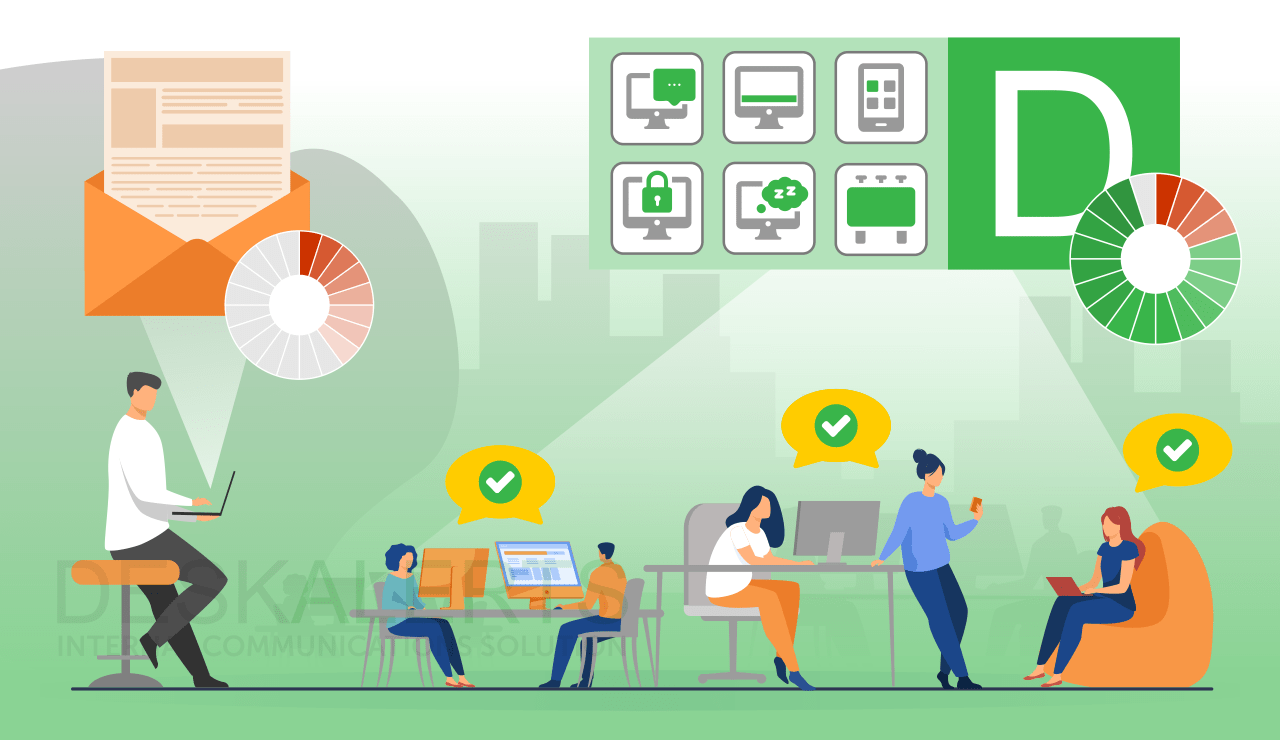
When it comes to communicating your workplace safety topics, taking a multi-channel approach is the best way to ensure that your employees receive your messages.
Essentially, this means using a variety of communications channels to ensure that it is more likely that your employees will get the information. When they are exposed to it via several different channels, it helps reinforce the information so that they retain it.
Channels that can be used to send safety information include:
- Email - you can send your workplace safety newsletter straight to employees’ inboxes.
- Intranet - create a dedicated space on your intranet where safety information is kept.
- Pop-up notifications – send a link to your newsletter or send other important safety information to boxes of text that appear on employees’ computer screens with pop-up alerts.
- Scrolling desktop tickers - as above, but the information is sent via a less intrusive band of scrolling text.
- Digital signage - use digital screens in your workplace to communicate safety messages
- Screensavers - like digital signage, but it will appear on every computer screen when it is idle.
- Mobile apps - communicate safety information to workers who aren’t at their desks via mobile app. Whether they travel or work in roles such as healthcare, construction, transport, manufacturing, retail or hospitality.
Workplace safety newsletter examples for your company
Here are some examples of safety messages you can include in your newsletter. You can use these as a safety newsletter template and put in the information relevant to your own business.
Example 1: Lifting
If you have to carry or lift heavy loads, it's important that you do so safely. You can injure yourself – particularly your back – if you do not lift or carry correctly.
- Keep the load close to your body and make sure you lift with your thigh muscles.
- Never attempt to carry or lift anything you think is too heavy.
- Use trolleys and mechanical aids instead.
For more information, see our fact sheet at [internal link].
Example 2: Fire wardens and first aid officers
Emergencies can happen when we least expect them. It’s important that we’re prepared ahead of time so that we know what to do.
At [company name] we have staff members who have roles they will play in the event of an emergency. This includes fire wardens and first aid officers.
Fire wardens will help you to take steps to be safe when there is an emergency such as a building fire. The following staff members are fire wardens: [list employees and include location and photo]
If you or a colleague require first aid, the following staff members are qualified first aid officers and can help to render assistance: [list employees and include location and photo].
Example 3: reporting on your safety data
We are pleased to announce that safety standards at [company name] have improved over the last quarter. There have been x incidents in the past three months compared with x incidents in the previous quarter. This is the third quarter where safety incidents have declined.
Thank you to everyone for your commitment to keeping yourselves and your colleagues safe. We are committed to having a culture of safety at [company name] and look forward to delivering even more improvements in the future.
***
If you are looking for innovative ways to send workplace safety information to your employees, get in touch with our friendly experts today to find out how DeskAlerts can assist.
FAQs
What should be included in a safety newsletter?
Your safety newsletter should include information on relevant workplace health and safety topics that apply to your company. This includes identifying hazards and risks, protective equipment, safe working practices, help and assistance available, promoting resources, and reminding employees about relevant policies, protocols and procedures.
What are the 10 rules for workplace safety?
There are 10 rules to adhere to when it comes to workplace safety:
- Everyone is responsible for safety
- Wear appropriate clothes and shoes
- Ensure workspaces are tidy
- Follow all safety rules
- Immediately report accidents and incidents
- Understand and follow any emergency procedures
- Take care with lifting and bending
- Only operate equipment you’ve been trained to use
- Ensure you aren’t affected by drugs or alcohol
- Ensure you take appropriate breaks
What is a safety newsletter?
A safety newsletter is a collection of articles, tips, stories, graphics and other information on a range of topics related to safety in the workplace that are relevant to the audience reading them.

 Caroline Duncan

 Steve Wilson: Sep 7, 2026, 9:00:00 AM